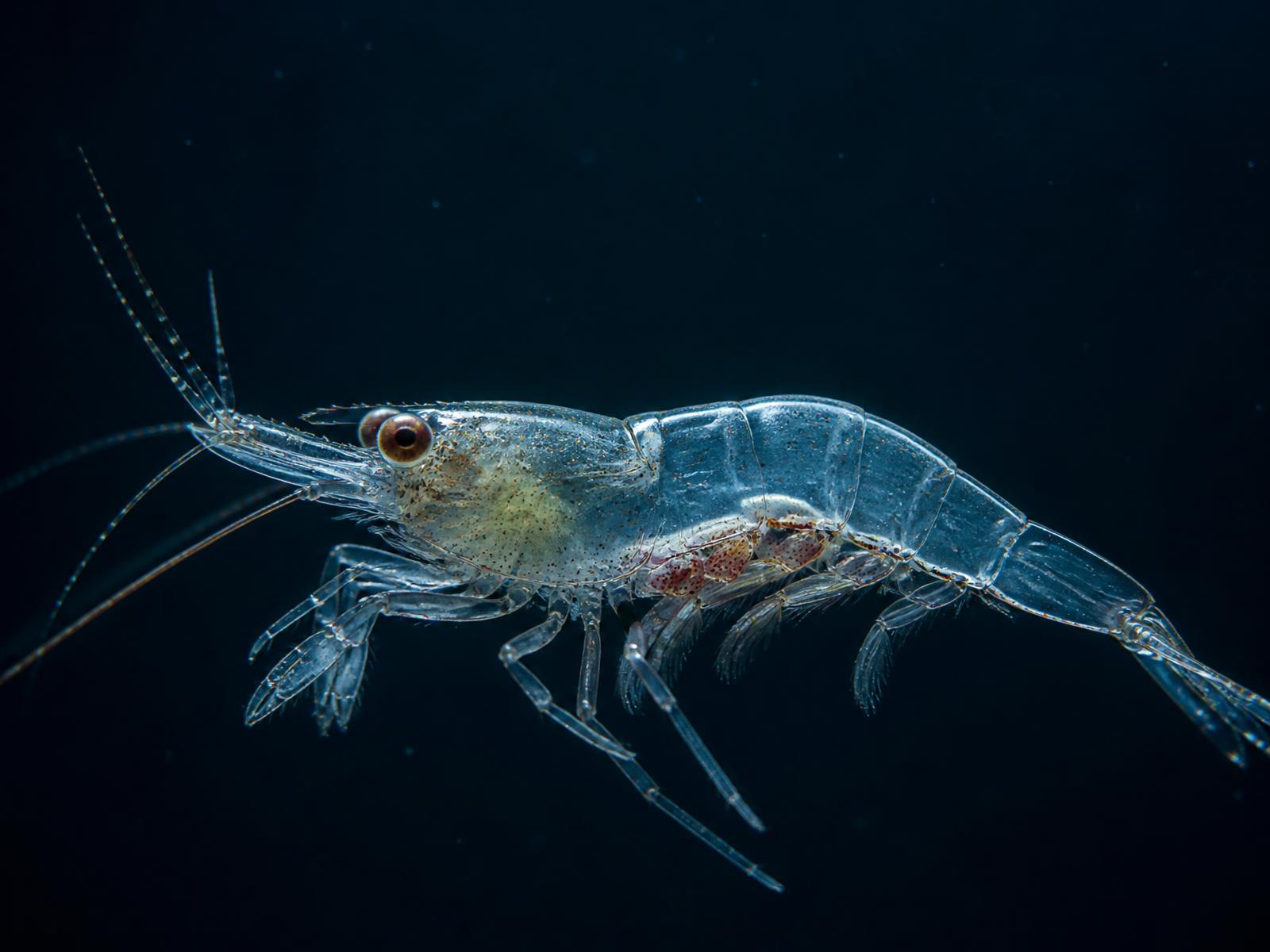
| Species | Palaemonetes paludosus, a freshwater shrimp |
|---|---|
| Salt water | Not tolerated long term; feed only what is eaten quickly |
| Role | Occasional live treat and feeding stimulus |
| Staple diet | Quality frozen mysis or other marine foods |
| Before feeding | Gut-load and hold in clean fresh water |
| Order counts | 1 to 24 singles or a 25 count |
Can seahorses eat freshwater shrimp?
Seahorses are ambush predators that eat small crustaceans, and the sight of a moving shrimp can trigger a strong feeding response. Many keepers use live foods to tempt a new seahorse to eat or to add enrichment. Ghost shrimp can play that role, with some important limits.
The main limit is simple: Palaemonetes paludosus is a freshwater species, and seahorses live in salt water. A freshwater shrimp dropped into a marine tank will weaken and die in a fairly short time. That is fine if it is eaten right away, and a problem if it is not.
The salt water problem
- Feed ghost shrimp in small numbers, ideally one or two at a time, so they are eaten while still moving.
- Do not add a batch and walk away. Dead shrimp decay and pollute the tank.
- Do not try to slowly convert ghost shrimp to full marine salinity. They are not a marine species.
- Use a target feeding station or feeding tube if your seahorses are slow eaters.
Gut-loading ghost shrimp
A ghost shrimp offers only what it contains, so feeding the shrimp well first improves its value. This is known as gut-loading. Hold your shrimp in clean fresh water and feed them quality flakes or pellets for a day or more before use. Some keepers use foods marketed for enrichment. Either way, healthy, well-fed shrimp make a better treat than hungry ones.
Disease and safety
One benefit of freshwater feeders is that many marine parasites and pathogens do not survive in fresh water, so they are less likely to carry marine diseases into a seahorse tank. That is not a guarantee. Feed only healthy shrimp, keep your holding tank clean, and never add holding tank water to your marine tank.
Float the sealed bag 20 to 30 minutes, then move the shrimp with a soft net or cup. Never pour the shipping water into your tank. Full steps are on our acclimation page.
A simple feeding routine
- Keep a small holding tank of ghost shrimp in fresh water with an air stone.
- Gut-load them for at least a day.
- Net one or two shrimp, rinse briefly, and offer them to the seahorses.
- Watch until they are eaten. Remove any that are ignored.
- Return to the staple diet for the rest of the feedings.
Why this matters to us
Ghost Shrimp Co. has a seahorse story at its roots. Demo, one of our founders, first collected freshwater shrimp to feed the seahorses he was breeding, which is how this business began. You can read the story on our About page. For more about seahorse biology and conservation, Project Seahorse is a good place to start.
Setting up a freshwater shrimp holding tank for seahorse treats
Because the treat shrimp live in fresh water and your seahorses live in salt water, you need a separate container. A small tank or tub with a sponge filter and an air stone is enough. Keep it at stable room temperature and feed the shrimp every day or two. Since you will only use a few shrimp at a time, a small count lasts a while, so focus on keeping them healthy rather than holding large numbers.
Our pick your count page lets you order just a few shrimp at $1.28 each, which suits occasional treat feeding.
Signs a seahorse is not ready for live freshwater treats
- It is newly added and still settling in. Focus on getting it eating frozen food first.
- It is recovering from illness or treatment. Keep the tank as stable as possible.
- Your tank has strong flow that sweeps shrimp away before the seahorse can strike.
Seahorses are slow, deliberate hunters. They tend to do best when food stays near them, so a calm area or feeding station helps them catch live prey.
Freshwater treats vs marine live foods
Marine keepers have other live options too, such as live marine shrimp and other saltwater crustaceans. Those can stay alive in the display tank, which is an advantage. Freshwater ghost shrimp have different strengths: they are easy to keep in a simple freshwater tub, they can be held for weeks, and because they come from fresh water, many marine pathogens are less likely to come along with them. The tradeoff is that they must be eaten quickly.
Many keepers use a mix: frozen mysis as the daily staple, occasional live marine foods, and freshwater ghost shrimp as an easy treat. Choose what suits your setup, and keep the staple diet consistent.
Portion and frequency
Seahorses have simple digestive systems and do well with frequent, modest meals of their staple food, as NOAA and Animal Diversity Web descriptions of seahorse biology suggest. Live freshwater treats fit around that routine. A reasonable approach is a few shrimp per seahorse, a couple of times a week, offered one at a time and only while the seahorses are actively hunting. If any seahorse ignores the shrimp, net it out rather than leaving it to die in the tank.
Frequently asked questions
Can seahorses eat ghost shrimp?
Many seahorses will eat live ghost shrimp. Use them as an occasional treat, not a staple.
How long do ghost shrimp live in salt water?
Not long. Ghost shrimp are a freshwater species, so feed only what is eaten right away.
Should I gut-load ghost shrimp before feeding seahorses?
Yes. Feeding the shrimp quality food for a day or more makes them a better treat.
Can I breed ghost shrimp as seahorse food?
Yes, many keepers do. See how to breed ghost shrimp.
Sources
- Animal Diversity Web (University of Michigan): Palaemonetes paludosus
- Animal Diversity Web: Hippocampus (seahorses)
- NOAA Ocean Service: seahorses
- Project Seahorse (University of British Columbia)
- Wikipedia (supplement): Gut loading
Husbandry notes are general guidance for hobbyists. Check your state's rules before keeping, releasing or using live animals as bait.