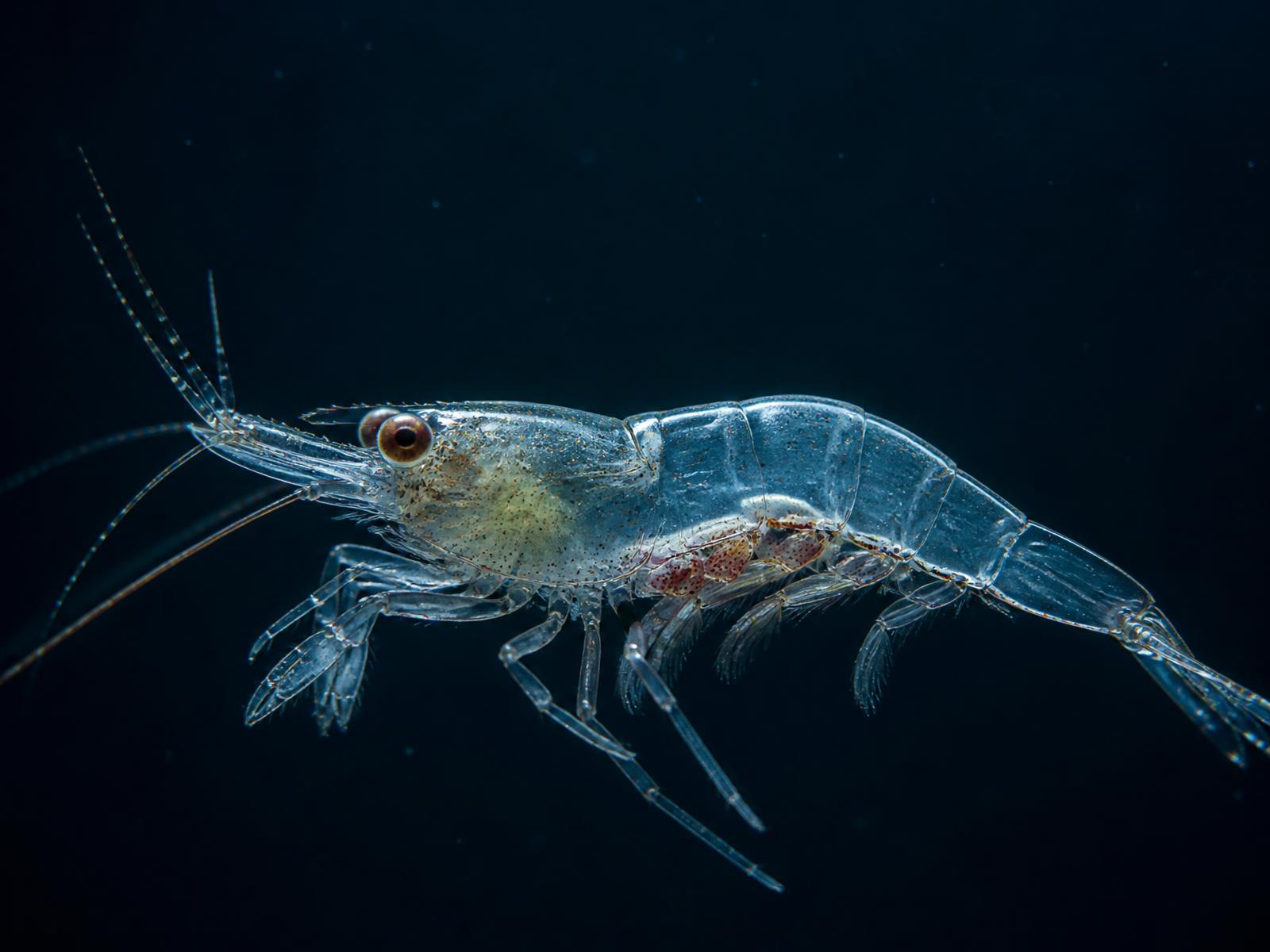
| Scientific name | Palaemonetes paludosus |
|---|---|
| Common names | Ghost shrimp, glass shrimp, freshwater grass shrimp, eastern grass shrimp |
| Family | Palaemonidae |
| Native range | Southeastern United States, including Florida |
| Habitat | Vegetated fresh waters: ponds, lakes, marshes, slow streams |
| Look | Nearly transparent body, often with small colored spots |
Identification
Palaemonetes paludosus is a small decapod with a clear, glassy body that lets you see its internal organs. Many individuals show faint orange or yellow spots. It has a toothed rostrum (the spike between the eyes), long antennae and two pairs of small clawed walking legs used to pick food.
Its transparency is a defense. Among plants in clear water, a still ghost shrimp can be very hard to spot.
Native range and habitat
The species is native to fresh waters of the southeastern United States, and Florida is part of that native range. It is typically found among submerged and emergent plants in ponds, lakes, marshes, ditches and slow streams. Outside its native range it has been recorded as introduced in some areas, which is one reason never to release aquarium animals.
What they eat in the wild
In the wild, ghost shrimp are omnivores and scavengers. They eat detritus, algae, small invertebrates and decaying material. In turn, they are prey for many native fish, birds and other wildlife, so they play a real role in freshwater food webs.
Life cycle
Females carry eggs under their abdomen until they hatch. Palaemonetes paludosus is known for spending its whole life cycle in fresh water, unlike some related shrimp that need brackish water for their larvae. Young shrimp are tiny and vulnerable. In the wild the life cycle is short, but in an aquarium expect 12 to 18 months in a stable tank. See how to breed ghost shrimp for the aquarium side.
Freshwater vs saltwater grass shrimp
The name grass shrimp causes confusion. Palaemonetes paludosus is the freshwater species. Saltwater grass shrimp, such as Palaemonetes pugio, are different species that live in estuaries and salt marshes and need salt water. If you need a shrimp for a freshwater tank or pond, you want P. paludosus.
Florida shrimp from New Smyrna Beach
Ghost Shrimp Co. is a new small business in New Smyrna Beach, Florida, shipping this native species across the continental United States. Every order is backed by our policy: Live arrival guaranteed. Before keeping or using them, check your state's rules, and never release shrimp into natural waters. For care basics, see our care guide.
Seasons and breeding in Florida
According to Animal Diversity Web, the breeding season of Palaemonetes paludosus varies with water temperature. In much of its range breeding runs from about February to October, but in Florida, where water stays warm, glass shrimp can breed year round. Females carry their eggs under the abdomen for up to about two months, and the larvae pass through a short development of three stages.
Size and lifespan
Adults usually do not exceed about 50 mm, roughly 2 inches, and many are smaller. The wild life cycle is short, often under about a year. In a stable aquarium, where there are no predators and food is steady, expect 12 to 18 months in a stable tank.
Why native matters
Keeping a native species has practical benefits. Ghost shrimp from the southeastern US are adapted to warm, soft to moderately hard fresh water and handle the range of conditions found in many home tanks. Native status is also a reminder of responsibility: never release them, even into Florida waters, because moving animals between waters can spread disease and disrupt local populations. FWC's nonnative species guidance explains why releases cause problems.
Where to see them in the wild
In Florida, ghost shrimp live among submerged plants in ponds, lakes, marshes, ditches and slow rivers. They stay near the bottom during the day and move more at night, which helps them avoid fish that hunt by sight, according to Animal Diversity Web. A dip net run through thick aquatic vegetation will often turn up these clear shrimp along with other small invertebrates.
If you explore, follow FWC rules for the area, and leave wild animals where you find them. Collecting from polluted water is never a good idea for an aquarium.
Role in the food web
Small shrimp like Palaemonetes paludosus turn algae and detritus into food that larger animals can use. Their main diet is algae, especially diatoms and green algae, plus plant matter, aquatic insects and other organic matter, according to Animal Diversity Web. In turn, sunfish, bass and many other fish, along with wading birds, eat them. That link between plants and predators is one reason healthy shrimp populations matter in Florida's lakes and wetlands.
It is also why ghost shrimp make such a natural live bait and fish food.
Florida ghost shrimp in the aquarium
The same traits that help ghost shrimp survive in Florida waters make them good aquarium animals. They tolerate a range of temperatures, eat almost anything, and breed in fresh water. In a stable tank they live 12 to 18 months. Give them plants, a cycled tank and peaceful tank mates, and they will spend their days sifting the substrate and picking at plants. If you want a native species for a biotope-style tank that represents a Florida spring or pond, ghost shrimp are a natural fit alongside native plants. See are ghost shrimp good cleaners for their tank role and how many per gallon for stocking.
Frequently asked questions
What is the scientific name of the Florida ghost shrimp?
Palaemonetes paludosus.
Are ghost shrimp native to Florida?
Yes. Palaemonetes paludosus is native to the southeastern United States, including Florida.
Are ghost shrimp and glass shrimp the same?
In the US hobby, glass shrimp often refers to Palaemonetes paludosus, though the name is used loosely.
Can Florida ghost shrimp live in salt water?
No. They are a freshwater species.
Sources
- Animal Diversity Web (University of Michigan): Palaemonetes paludosus
- Florida Fish and Wildlife Conservation Commission: invertebrate profiles
- FWC: nonnative species
- FWC: freshwater fishing
- Wikipedia (supplement): Palaemonetes paludosus
Husbandry notes are general guidance for hobbyists. Check your state's rules before keeping, releasing or using live animals as bait.