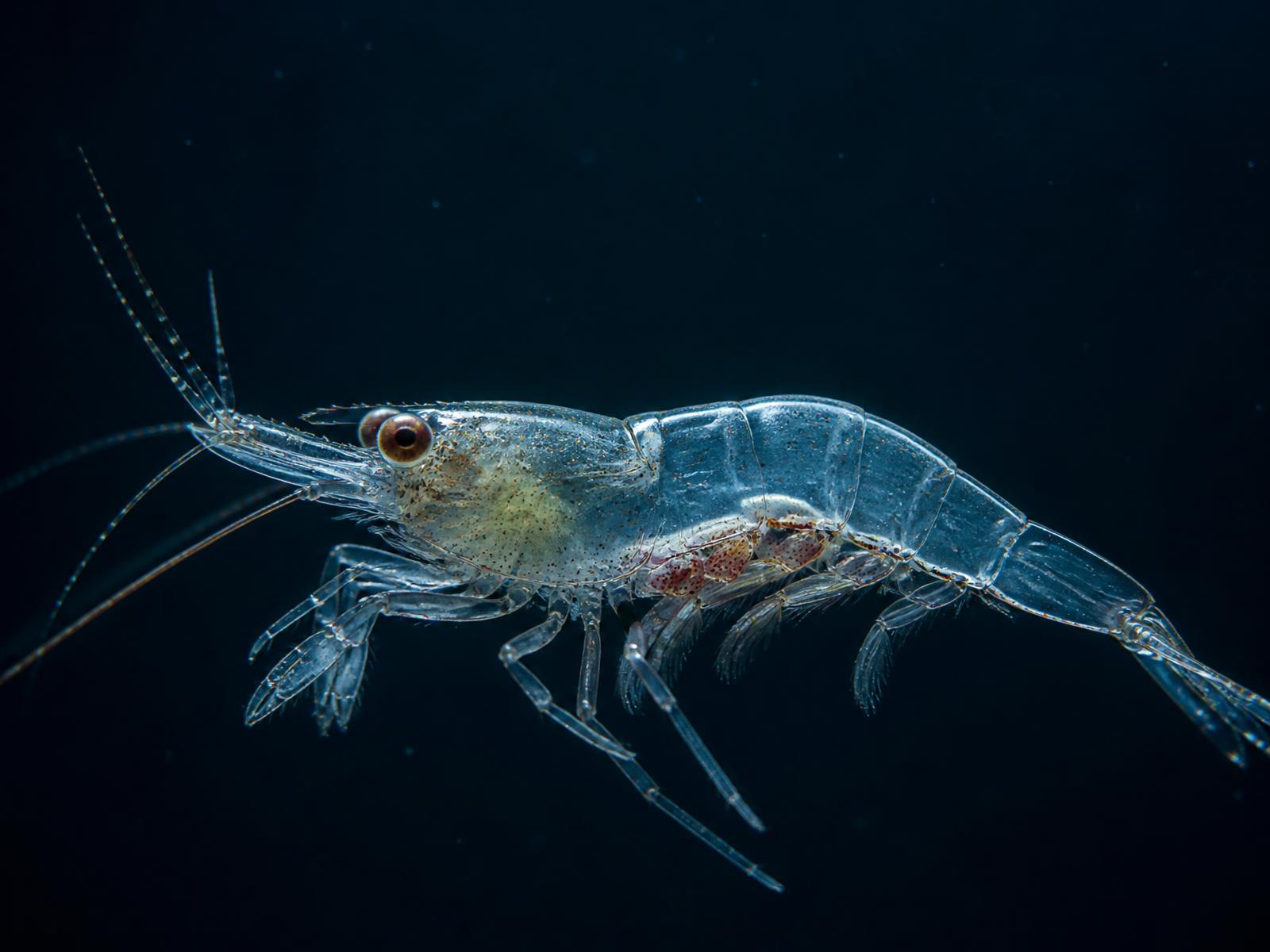
| Species | Palaemonetes paludosus |
|---|---|
| They clean | Leftover food, soft biofilm, some soft algae, detritus |
| They don't clean | Hard algae, fish waste in the water, dirty filters |
| Best tanks | Peaceful planted community tanks |
| Unsafe with | Large cichlids, puffers, bettas that hunt, big predators |
| Best buy | Clean-Up Crew Bundle or 25 count |
What ghost shrimp actually eat
Ghost shrimp are omnivorous scavengers. In an aquarium they constantly pick through gravel, plant leaves and decorations for leftover food, biofilm and soft debris. Their small claws let them sift substrate in a way that fish cannot, which is why many keepers notice less leftover food after adding them.
What they won't clean
- Hard green spot algae and stubborn algae on glass.
- Dissolved waste in the water. Only water changes and filtration remove that.
- Clogged filter media or heavy mulm in a neglected tank.
Pairing shrimp with snails
Shrimp and snails clean in different ways. Nerite snails graze hard surfaces and glass, mystery snails eat leftover food and soft debris, and ghost shrimp work the substrate and plants. That is why our Clean-Up Crew Bundle combines all three with live copepods in one box.
How many ghost shrimp per tank
Stock lightly and build up. Our 25 count is designed as a starter crew for tanks from 5 to 20 gallons. Larger tanks can handle more. More shrimp is not always cleaner; if there is not enough food, they compete and the extra bioload works against you.
Safe tank mates
Ghost shrimp are peaceful but small, and anything that can fit them in its mouth may eat them. They do well with small peaceful fish such as many tetras, rasboras and corydoras. They are food, not cleaners, in tanks with cichlids, puffers and large predators. Our tank mates guide has more detail. If you want shrimp as food, see ghost shrimp for pufferfish.
Adding them to your tank
- Float the sealed bag 20 to 30 minutes, then move the shrimp with a soft net or cup. Never pour the shipping water into your tank. Full steps are on our acclimation page.
- Add them to a cycled tank, never a brand-new one.
- Give them plants or hiding spots. Shrimp hide after molting.
- Do not overfeed to 'feed the shrimp'. They will find leftovers.
- Read the molting guide so a shed shell does not alarm you.
A day in the life of a cleaner shrimp
Ghost shrimp are more active at night, according to Animal Diversity Web. In an aquarium you will often see them out during the day too, especially at feeding time, but the real cleaning happens after the lights go off. They walk the substrate, comb plant leaves, and pick at the surfaces of rocks and wood. In the wild their diet is dominated by algae such as diatoms, along with plant matter and detritus, which is why they fit so naturally into a planted tank.
Setting up a tank for cleaner shrimp
- Plants: fine-leaved plants and moss trap detritus and give shrimp grazing surfaces.
- Substrate: sand or fine gravel lets shrimp sift for food. Large gravel traps food out of reach.
- Hiding places: wood, rock caves and plant thickets protect shrimp after molting.
- Gentle filtration: a sponge or covered intake keeps small shrimp from being sucked in.
- No copper: many fish medications contain copper, which is toxic to invertebrates. Remove shrimp before treating.
Signs your cleaner crew is working
- Less leftover food on the substrate a few hours after feeding.
- Shrimp actively picking at plants and glass.
- Clean, clear molts showing healthy growth.
If leftover food piles up, you are feeding more than the crew and fish can eat. Cut back first. Adding more shrimp is the second step, not the first. Want a ready mix? The Clean-Up Crew Bundle pairs shrimp with snails and copepods.
Ghost shrimp vs snails vs fish cleaners
Clean-up animals each cover a different part of the tank, so it helps to know where ghost shrimp fit.
- Ghost shrimp: best on the substrate, inside plant thickets and in corners where food settles. They are quick to find leftovers and reach places snails and fish miss.
- Nerite snails: best on glass, rocks and hard leaves, where they graze films of algae.
- Mystery snails: large grazers that eat leftover food and soft plant debris.
- Bottom-feeding fish such as corydoras: stir the substrate and eat sinking food, but they add more bioload than shrimp.
A tank with a mix of shrimp and snails usually stays tidier than one relying on a single kind of cleaner, because each covers ground the others skip.
Feeding a clean-up crew
A common misunderstanding is that cleaner animals need no food. In a well-kept tank, leftovers may not be enough, especially for a larger group. Watch your shrimp: if they constantly search and look thin, offer a small amount of sinking pellets or blanched vegetables a few times a week. If food is left after a few hours, cut back. The aim is a tank where leftovers disappear without piling up, while your shrimp stay active and molt cleanly.
For a full feeding rundown, see our feeding guide. For how many to keep, see how many ghost shrimp per gallon.
Quick start for a new crew
Wait until your tank is fully cycled, add shrimp near plants after acclimation, and keep the lights low for the first day. Do not feed extra on day one. After a week, check how quickly leftovers disappear and adjust feeding.
Frequently asked questions
Do ghost shrimp eat algae?
They graze soft algae and biofilm, but they do not remove hard algae. Snails help with that.
Do ghost shrimp clean fish poop?
They pick at some debris, but they do not replace water changes or gravel vacuuming.
How many ghost shrimp for a 10 gallon tank?
A small group is a good start. Our 25 count is designed for 5 to 20 gallon tanks; stock toward the low end for smaller tanks.
Will ghost shrimp eat my plants?
Ghost shrimp generally pick at debris and biofilm on plants rather than eating healthy plants.
Sources
- Animal Diversity Web (University of Michigan): Palaemonetes paludosus
- US EPA CADDIS: ammonia
- US EPA CADDIS: dissolved oxygen
- Wikipedia (supplement): Nitrogen cycle
Husbandry notes are general guidance for hobbyists. Check your state's rules before keeping, releasing or using live animals as bait.