| Scientific name | Ghost: Palaemonetes paludosus. Amano: Caridina multidentata |
|---|---|
| Native range | Ghost: southeastern US. Amano: East Asia |
| Breeding in fresh water | Ghost: yes. Amano: larvae need brackish water |
| Main use | Ghost: cleaner, feeder, bait. Amano: algae grazer |
| Look | Ghost: clear. Amano: translucent with dots and dashes |
| Feeder use | Ghost: common. Amano: rarely used |
Two different shrimp for two different jobs
Ghost shrimp and Amano shrimp are both popular clear-bodied freshwater shrimp, so beginners often treat them as interchangeable. They are not. They belong to different families, come from different parts of the world and have very different life cycles. That affects what they do in your tank and whether you can keep a breeding population.
Ghost shrimp belong to the family Palaemonidae and are native to fresh waters of the southeastern United States. Amano shrimp belong to the family Atyidae and are native to East Asia. The name Amano comes from Takashi Amano, the aquascaper who made them famous for algae control.
Algae eating
Amano shrimp are known as some of the strongest algae grazers in the hobby, especially for soft hair algae, and their fan-like claws are well suited to picking films off surfaces. Ghost shrimp also eat algae; in the wild their diet is dominated by diatoms and green algae, according to Animal Diversity Web. In aquariums, ghost shrimp tend to act more as all-round scavengers, cleaning up leftover food and detritus as well as soft algae.
If heavy algae is your main problem, Amano shrimp may be the stronger single choice, but no shrimp fixes the causes of algae: too much light, excess nutrients or overfeeding. Our cleaner guide covers what ghost shrimp do and do not clean.
Breeding: the biggest difference
Ghost shrimp complete their life cycle in fresh water. Their larvae pass through a short development of three stages, according to Animal Diversity Web, which is why many hobbyists breed them at home. Amano shrimp larvae need brackish or salt water to develop, so Amano shrimp almost never build a population in a normal freshwater tank.
If you want a self-sustaining colony, or a home supply of feeders, ghost shrimp are the clear choice. See how to breed ghost shrimp.
Temperament and tank mates
Both are generally peaceful toward fish. Ghost shrimp are opportunistic and can catch very small fry or weak tiny fish, so avoid housing them with fish fry you want to keep. Amano shrimp are considered very peaceful. Both will be eaten by large fish. Because ghost shrimp are often sold as feeders, they are an affordable way to test whether shrimp survive with your current fish before you invest in a display crew.
Feeding fish: ghost shrimp only
Ghost shrimp are widely used as live food for puffers, cichlids and other predators, and as treats for seahorses. Amano shrimp are rarely used this way. If you keep predatory fish, ghost shrimp fit that role, as covered in ghost shrimp for pufferfish and ghost shrimp for cichlids.
Can they live together?
Yes. Many keepers combine them in planted tanks. Amano shrimp work the algae on surfaces while ghost shrimp clean the substrate and leftovers. Give them plenty of plants and hiding places, and feed enough that the ghost shrimp do not compete heavily for food.
Which should you buy?
- Choose ghost shrimp for a versatile cleaner, a breeding project, a feeder supply, a US native species or a budget-friendly first shrimp.
- Choose Amano shrimp for a display tank where heavy algae grazing is the top priority and breeding does not matter.
- Choose both for a planted tank where you want broad cleaning coverage.
Size, look and identification
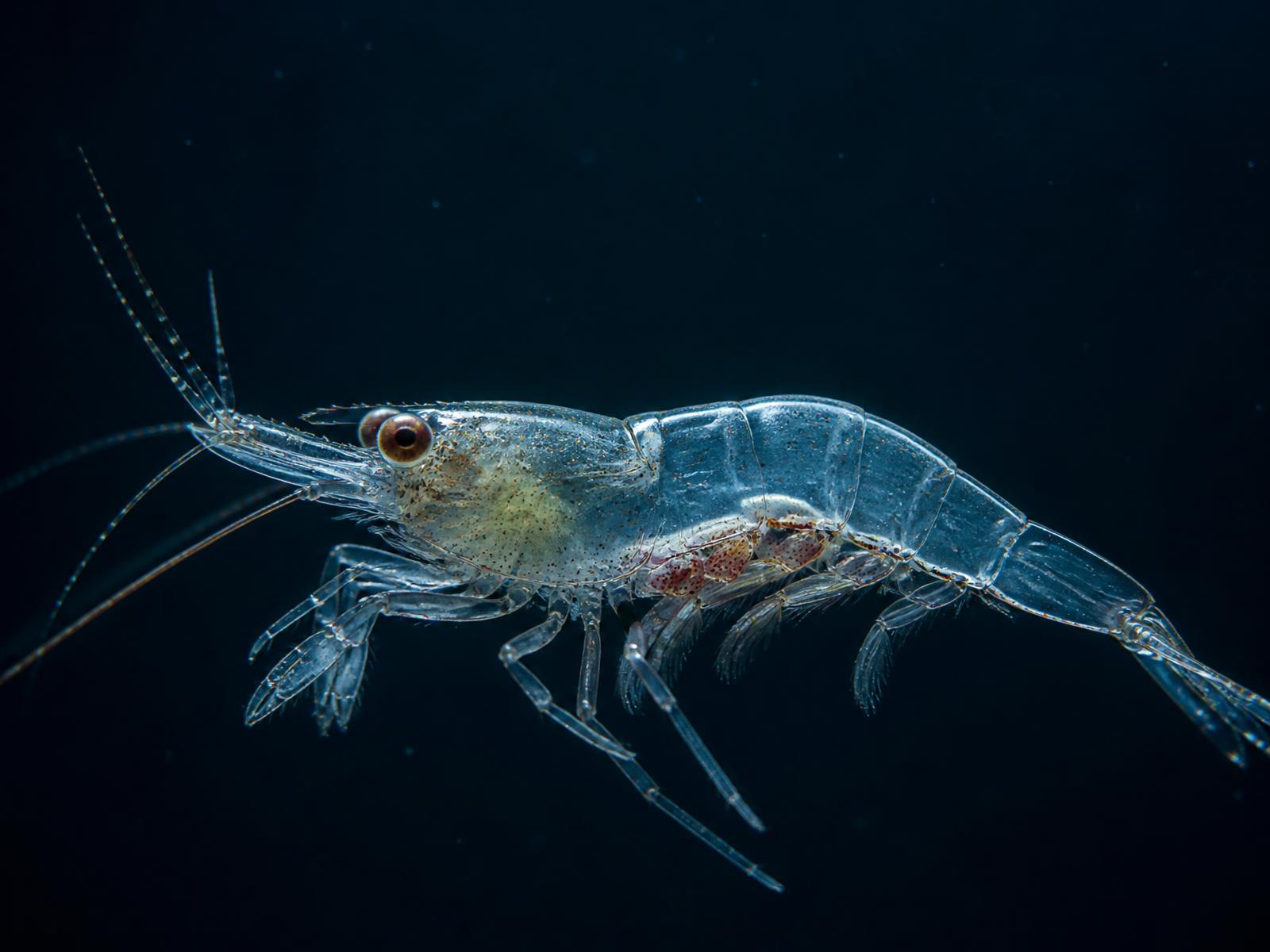
Adult ghost shrimp usually do not exceed about 2 inches (50 mm), according to Animal Diversity Web, and many are smaller. They are almost completely transparent, often with small orange or yellow spots, and have two pairs of clawed walking legs. Amano shrimp are similar in size, but their bodies are translucent grey or tan with rows of small dots and dashes along the sides. If you can see straight through the shrimp, it is almost certainly a ghost shrimp.
Water conditions
Both shrimp do well in a stable, cycled freshwater tank with moderate temperatures and no copper. Ghost shrimp are native to warm southeastern US waters, which range widely in temperature in the wild, according to Animal Diversity Web. That tolerance makes them forgiving in typical home tanks. Whichever you choose, stability matters more than chasing exact numbers.
See our water parameters page for target ranges.
Cost and availability
Ghost shrimp are bred and collected in the US and sold in counts from a single shrimp up to bulk packs, so they are easy to buy in the number you need. Because they breed in fresh water, a small group can grow into a colony over time. Start with our pick your count page or a 25 count, and see how they do in your tank before deciding on a mixed crew.
Lifespan compared
Ghost shrimp live 12 to 18 months in a stable tank. If you want a crew that renews itself, their ability to breed in fresh water makes up for the shorter life. Amano shrimp numbers only fall over time unless you buy more.
Frequently asked questions
Are ghost shrimp or Amano shrimp better algae eaters?
Amano shrimp are generally considered stronger algae grazers. Ghost shrimp are better all-round scavengers.
Can ghost shrimp and Amano shrimp breed together?
No. They are different species in different families.
Do Amano shrimp breed in freshwater tanks?
Rarely. Their larvae need brackish water. Ghost shrimp breed in fresh water.
Can I keep ghost shrimp and Amano shrimp together?
Yes, in a peaceful planted tank with enough food and hiding places.
Sources
- Animal Diversity Web (University of Michigan): Palaemonetes paludosus
- Animal Diversity Web: Decapoda
- Florida Fish and Wildlife Conservation Commission: invertebrate profiles
- Wikipedia (supplement): Caridina multidentata
Husbandry notes are general guidance for hobbyists. Check your state's rules before keeping, releasing or using live animals as bait.