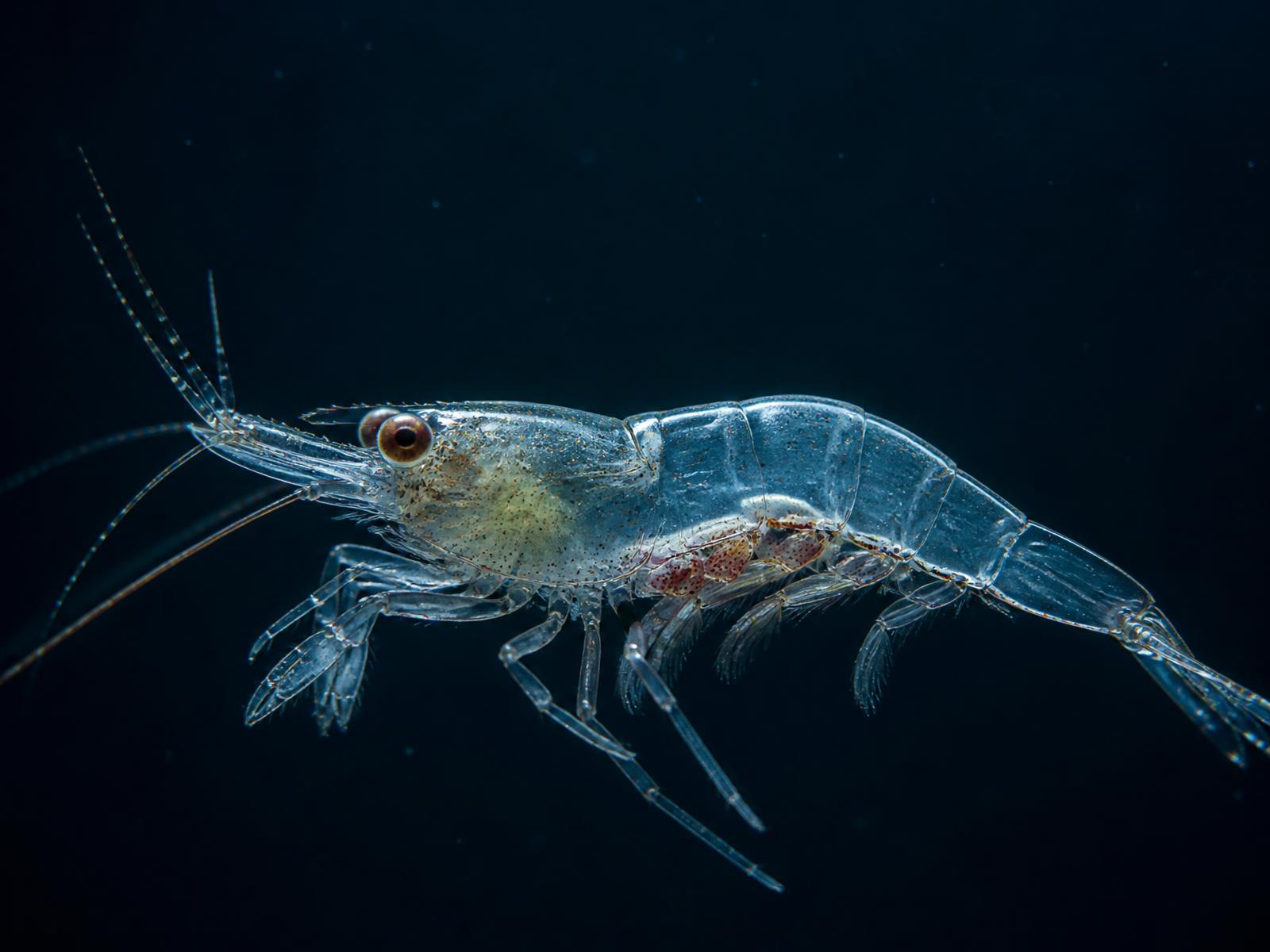
| Process | Shedding the exoskeleton to grow (ecdysis) |
|---|---|
| Juveniles | About every 1 to 2 weeks |
| Adults | About every 3 to 4 weeks |
| After molting | Soft, pale and hiding for several hours |
| Molt vs dead | Molt: clear and hollow. Dead: opaque white or pink |
| Main risks | Sudden water changes, unstable hardness, poor diet |
Why ghost shrimp molt
Like all crustaceans, ghost shrimp wear their skeleton on the outside. It cannot stretch, so to grow a shrimp must build a new, soft shell underneath, split the old one and climb out. The new shell then hardens over the following hours. This process is called ecdysis. Molting is also tied to breeding: Animal Diversity Web notes that females become receptive to males right after molting, while their shell is still soft.
How often they molt
Young shrimp grow fast and molt every one to two weeks. Adults molt about every three to four weeks. Frequency can vary with temperature, food and age. Warmer water and plenty of food speed growth and molting. Our store's molting page has a quick reference.
Molt or dead shrimp?
This is the most common worry for new keepers. A molt is a perfectly clear, hollow shell, usually split at the joint between the head and body, with no tissue inside. It often looks like a whole shrimp lying still. A dead shrimp turns opaque white or pinkish within hours and has a solid body.
If you find what looks like a dead shrimp, count your shrimp before panicking. You will often find the owner hiding nearby, pale and soft.
Leave the molt in the tank
Shrimp often eat their old shells, which may help them recover minerals. Leave molts for a few days. If one is still there after that and starting to break down, remove it.
The soft-shell window
Right after molting a shrimp is soft and vulnerable for several hours. It will hide, eat little and avoid other animals. That is why cover matters: plants, moss, wood and rock caves give shrimp a safe place to harden. Without cover, fish and even other shrimp may pick on a soft shrimp.
Failed molts and what causes them
A failed molt is when a shrimp gets stuck partway out of its old shell. It may appear with a visible split or band around the body. This is often called the white ring of death in the hobby. A stuck shrimp usually cannot be saved, so prevention is key.
- Sudden water changes: large changes with water of different temperature or hardness can trigger a molt before the shrimp is ready.
- Unstable hardness: shrimp need minerals to build a new shell. Very soft water or big swings can cause trouble.
- Poor diet: a varied diet supports healthy shell growth.
- Toxins: ammonia, nitrite and copper stress shrimp and interfere with normal molting.
Supporting healthy molts
- Keep temperature and hardness stable from week to week.
- Change small amounts of water regularly, matching temperature.
- Offer a varied diet with sinking pellets, vegetables and quality flakes.
- Provide cover so shrimp can hide while soft.
- Test for ammonia and nitrite and avoid copper.
For target ranges, see our water parameters page. For how molting fits into overall lifespan, see ghost shrimp lifespan.
Molting and breeding
Molting and reproduction are closely linked in ghost shrimp. According to Animal Diversity Web, females become receptive to males right after they molt, while the shell is still soft, and mating happens within hours. After mating, females carry eggs under the abdomen for up to about two months. If you see a sudden burst of activity in your tank after a female molts, with males swimming around searching, that is normal breeding behavior.
For the full process, see how to breed ghost shrimp.
What to do if a shrimp is stuck
If you catch a shrimp partway through a molt, the kindest step is usually to leave it alone and keep the tank calm. Handling can injure soft tissue. Make sure nothing in the tank is picking at it, and check your water for ammonia, nitrite, temperature swings and hardness changes. If several shrimp fail molts in a short time, that strongly suggests an environmental cause. Stop large water changes, test the water, and make changes slowly over the next few weeks.
A molting checklist
- Clear, hollow shells in the tank: normal.
- Shrimp hiding and pale for a few hours: normal.
- Shrimp stuck partway out, or a visible band: failed molt; check water.
- Several deaths after a big water change: change water more gradually.
- No molts for weeks in a young group: check food, temperature and water quality.
Diet for strong shells
A new shell needs building materials. Offer a varied diet that includes sinking pellets, blanched vegetables and quality flakes, and let natural biofilm grow on surfaces, since ghost shrimp graze it constantly. Avoid overfeeding, which pollutes the water and does more harm than good. Stable mineral content in the water also matters; if you use very soft or purified water, check that it still has enough hardness for invertebrates, and change water gradually so hardness does not swing.
Molting in new arrivals
Newly shipped shrimp sometimes molt in the first days after arrival, as their bodies respond to new water. That is normal. Careful acclimation and stable water reduce the chance of a stressful molt right after the move.
Frequently asked questions
How often do ghost shrimp molt?
Juveniles about every one to two weeks; adults about every three to four weeks.
Should I remove ghost shrimp molts?
Leave them for a few days so shrimp can eat them. Remove one only if it starts breaking down.
Why did my ghost shrimp die while molting?
Failed molts are often linked to sudden water changes, unstable hardness, poor diet or toxins.
How do I know my shrimp is about to molt?
Shrimp often hide more and eat less shortly before molting.
Sources
- Animal Diversity Web (University of Michigan): Palaemonetes paludosus
- Animal Diversity Web: Decapoda
- US EPA CADDIS: ammonia
- Wikipedia (supplement): Ecdysis
Husbandry notes are general guidance for hobbyists. Check your state's rules before keeping, releasing or using live animals as bait.