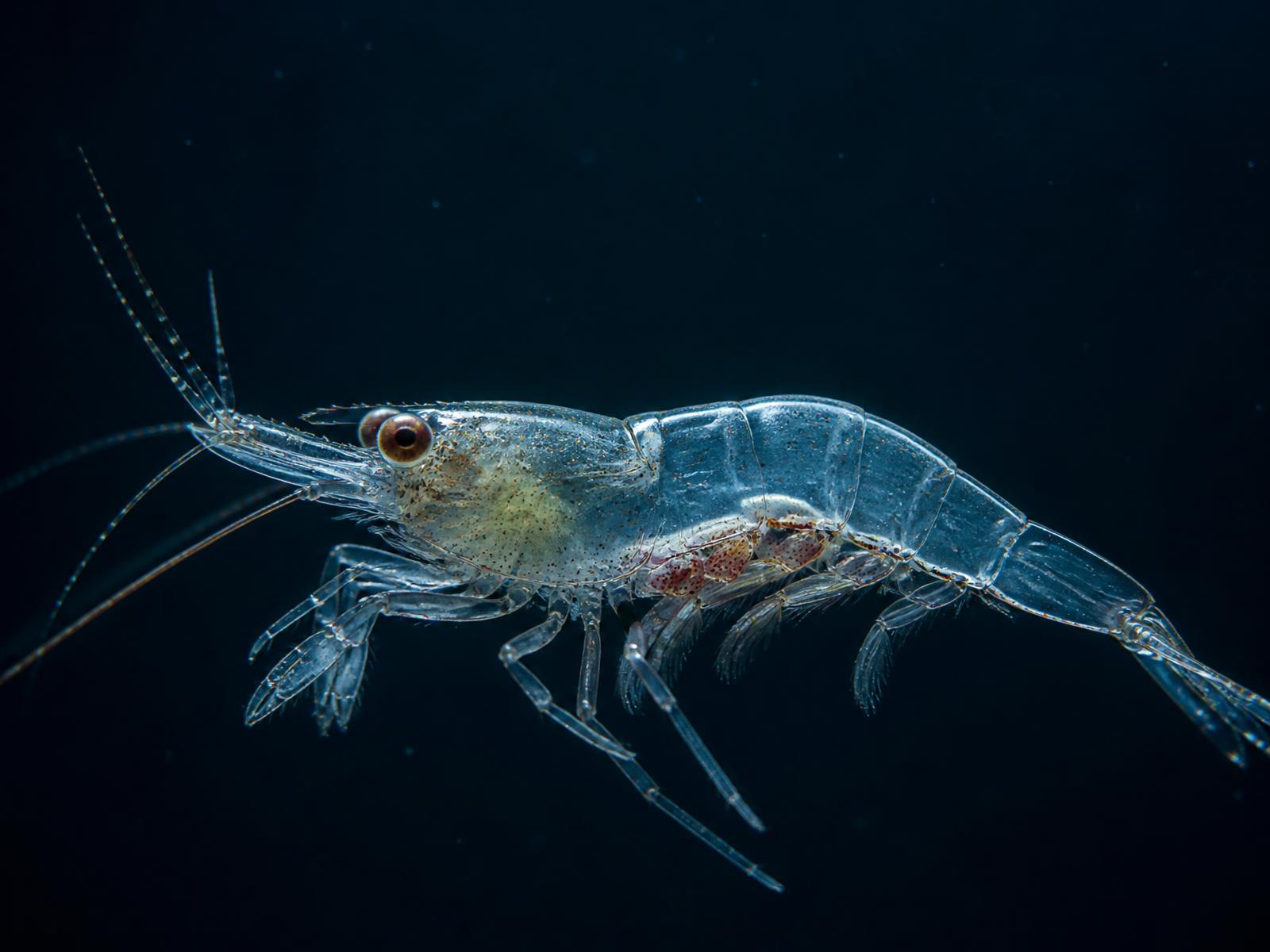
| Species | Palaemonetes paludosus, also called grass shrimp |
|---|---|
| Typical size | Up to about 2 inches (50 mm) |
| Target fish | Bluegill, sunfish, crappie, bass and other fish that eat small crustaceans |
| Hook | Small light-wire hook |
| Keep alive | Cool water, aeration, shade |
| Bait counts | 100, 250 or 500 count |
Why fish eat ghost shrimp
Palaemonetes paludosus lives naturally in vegetated freshwater in the southeastern United States, and small crustaceans are an ordinary part of many freshwater fish diets. Largemouth bass are opportunistic predators that eat fish, crayfish and other prey, while bluegill, sunfish and crappie feed heavily on small invertebrates. A small, live, natural-looking shrimp fits right in.
Because ghost shrimp are small, they shine for panfish and crappie. For bass they work best as a finesse option, especially where the fish are feeding on small prey.
Hooking and rigging
- Tail hook: pass a small light-wire hook through the last tail segment. The shrimp stays lively and kicks naturally.
- Head hook: hook just under the horn on the head, avoiding the dark organ area, for a secure hold on casts.
- Under a float: suspend the shrimp near weed edges, docks or brush where panfish hold.
- Tipping a jig: add a shrimp to a small crappie jig for scent and movement.
Use light line and small split shot so the shrimp moves naturally. Heavy tackle hides a small bait.
Keeping bait shrimp alive
- On arrival, open the box and check the bags. Float the sealed bag 20 to 30 minutes, then move the shrimp with a soft net or cup. Never pour the shipping water into your tank. Full steps are on our acclimation page.
- For a short trip, keep shrimp in a cooler or bait bucket with clean water from their holding tank and a battery air pump.
- Keep them shaded. Hot water holds less oxygen and shrimp weaken fast in the sun.
- Do not overcrowd. Spread large counts across more than one container.
Holding bait between trips
If you buy in larger counts, a simple holding tank with a filter or air stone keeps shrimp healthy for later trips. Feed them lightly and change water regularly. Our care guide covers the basics, and the monthly delivery can line up a fresh batch before your usual fishing week.
Check local rules first
Live bait rules vary by state and sometimes by water body. Some places restrict moving live animals between waters or using certain species as bait. In Florida, start with the FWC freshwater fishing regulations. In other states, check your state wildlife agency before you buy.
Never release unused bait into a lake, river or pond. Dispose of leftovers on land or keep them in your holding tank. Releasing live animals can spread disease and species into new waters.
Where ghost shrimp fit in your tackle box
Think of ghost shrimp as a natural, light presentation for days when fish are picky. They pair well with small jigs and floats and are easy to keep at home. If you want to learn more about the species itself, read our Florida ghost shrimp guide.
Best times and places to fish shrimp
Ghost shrimp are most active at night and stay near the bottom and in vegetation during the day, according to Animal Diversity Web. Fish that eat them hunt the same places. That makes weed edges, lily pads, submerged grass, dock pilings and brush piles natural spots to drift a shrimp.
- Early morning and evening: panfish and crappie move shallow and feed actively.
- Around cover: drop a shrimp under a float right beside vegetation rather than in open water.
- Cool months: fish deeper and slower, letting the shrimp sit near the bottom.
Panfish rig, step by step
- Tie on a small light-wire hook with light line.
- Add one small split shot several inches above the hook.
- Clip on a small float set so the shrimp hangs just above the weeds or bottom.
- Tail-hook a lively shrimp and cast beside cover.
- Wait for the float to bob or slide under, then lift gently. Small fish take shrimp softly.
Change the shrimp when it stops kicking. A lively shrimp catches far more fish than a dead one.
Ghost shrimp vs other live bait
Anglers have many live bait options, and each has a place. Minnows are a classic for crappie and bass and work well for larger presentations. Worms are easy and catch almost anything. Crickets work well for bluegill in summer. Ghost shrimp stand out as a small, natural crustacean that fish in vegetated water already eat, and they are easy to keep alive at home between trips. Many anglers carry two baits and see which the fish want that day.
Handling tips on the water
- Wet your hands before handling shrimp so you do not damage their gills or shell.
- Use a small dip net instead of grabbing shrimp from the bucket.
- Change bucket water with lake water only if your local rules allow it, and never dump the bucket back into the lake.
- Bring a small cooler for hot days. Shade and moving water keep bait alive much longer.
Ordering bait for a trip
Live shrimp ship Monday through Wednesday, so plan ahead for weekend trips. Ordering early in the week gives the shrimp time to arrive and settle in a holding tank before you fish. For a group outing, the 100 count is a practical size.
Frequently asked questions
Are ghost shrimp and grass shrimp the same?
In freshwater, Palaemonetes paludosus is commonly sold as both ghost shrimp and grass shrimp. Saltwater grass shrimp are a different species.
Do bass eat ghost shrimp?
Bass are opportunistic and eat small crustaceans, so ghost shrimp can work, especially in finesse setups. They are especially effective for panfish and crappie.
What hook size should I use?
A small light-wire hook suits a shrimp of this size. Smaller hooks keep the shrimp lively.
Is it legal to use ghost shrimp as bait?
Rules vary by state. Check your state wildlife agency, such as FWC in Florida, before fishing.
Sources
- Animal Diversity Web (University of Michigan): Palaemonetes paludosus
- FWC: largemouth bass profile
- Animal Diversity Web: Micropterus salmoides
- FWC: freshwater fishing regulations
- FWC: freshwater fishing
- FWC: nonnative species
- US EPA CADDIS: temperature
Husbandry notes are general guidance for hobbyists. Check your state's rules before keeping, releasing or using live animals as bait.